
Mental strength is built through small, repeatable choices: returning to a task after a distraction, considering another point of view, or pausing to work through a problem. AI can make those choices easier to practice by offering exercises you can adjust on the spot. The useful part, though, is the thinking you do—not a score or verdict from a tool.
Start with a goal you can recognize in daily life. “I want to work on one task for ten minutes without switching tabs” gives you more to work with than “I want to boost my brain.” You might instead practice generating two options before making a decision or considering another person’s perspective before responding to a disagreement.
Take a simple starting benchmark. Notice how long you usually work before changing tasks, or how many possible solutions you consider before choosing one. This is a personal reference point, not a test of intelligence. Practice may help you handle a particular situation more deliberately, but it does not guarantee improvements in memory, mood, or cognitive health. For broader guidance on supporting cognitive health, see the National Institute on Aging’s cognitive health resources.
Give your AI tool four pieces of information: the skill you want to practice, the time you have, the difficulty you want, and the feedback you would find useful. For example: “Help me practice flexible thinking for six minutes. Use an everyday situation, ask one question at a time, and tell me where I may have overlooked an option.”
You can ask for a careful-reading task to practice attention, a dilemma with two reasonable choices, or a challenge to an assumption you hold. Keep the tool in a supporting role. Ask it to pose questions and offer hints, rather than supply the answer before you have tried. If it gives away too much, tell it to wait for your response before continuing.
| Skill | What to ask for | What to notice |
|---|---|---|
| Attention | “Give me a five-minute careful-reading task. Ask one question at a time.” | When your attention drifts and what brings it back |
| Flexible thinking | “Present an everyday dilemma. After I respond, ask for a different perspective.” | Whether a second approach becomes easier to find |
| Problem-solving | “Give me a realistic challenge. Offer hints only if I ask.” | Which steps you try before requesting help |
| Reflection | “Ask me three questions about how I handled a challenge today.” | One action worth repeating or changing |
Try a ten-minute session: spend two minutes choosing your goal, six minutes doing one exercise, and two minutes recording what happened. Your note can be brief: “I wanted a hint after two minutes; breaking the problem into parts helped.” It gives you something concrete to revisit without turning practice into another large task.
When an exercise becomes comfortable, change one thing. Work a little longer, request fewer hints, or try a more complex scenario. Avoid adding several new exercises at once; then it becomes harder to tell what is useful. Once a week, review whether you practiced consistently and whether the skill showed up outside the session. An AI-generated score is not a clinical assessment and need not determine whether your practice was worthwhile.
A physical reminder may help you keep the routine visible. For instance, if you already use a kitchen counter as a place to plan your day, an everyday item such as our Nordic Ceramic Seasoning Jar Set could be a cue to pause and choose one task before moving on. The item is not part of the exercise; the deliberate pause is.
AI responses can be mistaken or sound more certain than they should. Verify important factual claims with reliable sources, and judge an exercise by whether it helps you practice your chosen skill—not by how impressive its wording sounds. You can also reject a scenario that feels irrelevant and ask for a more ordinary one.
Keep sensitive personal and medical details out of your requests. A generalized description such as “a disagreement about shared responsibilities” is often enough to practice considering two perspectives. Review the privacy settings of any tool you use, particularly if you plan to save conversations.
Focus and reflection exercises do not replace professional care. If distress persists or interferes with daily life, seek support from a qualified professional. The National Institute of Mental Health’s guidance on caring for your mental health offers information on when to seek help.
The screen is only a starting point. After a flexible-thinking exercise, pause before replying to a frustrating message and consider a second interpretation. After a problem-solving exercise, outline two ways to handle a household snag before picking one. After an attention exercise, finish one manageable task without opening another tab. These moments help you see whether your practice is useful where you need it.
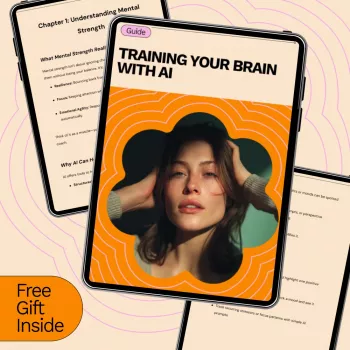
If you want a dedicated starting point, we offer Training Your Brain with AI: A Guide to Using AI for Mental Strength Training. Whether you use our guide or build your own routine, keep your next step modest: choose one skill, try one exercise today, and note one adjustment for tomorrow.
Start with a short session several times a week, then adjust to keep it useful and manageable. Consistency matters more than a long session.
No. AI can generate exercises and reflection questions, but it cannot provide a reliable diagnosis or replace care from a qualified professional.
If it feels too difficult, ask for a simpler scenario, fewer steps, or one hint at a time. Increase complexity gradually when it becomes comfortable.











Leave a comment