Saving money on gas does not have to mean skipping trips or changing cars. A few repeatable habits can help you use less fuel on the miles you already drive: accelerate more smoothly, plan practical routes, and keep your vehicle from working harder than necessary. Start with changes that fit your routine, then track what makes a difference for you.
When traffic allows, accelerate gradually and look farther down the road. If you see a red light ahead, easing off the gas early may let you slow down without braking hard at the last moment. Leave enough space to respond safely to other drivers; saving fuel is never a reason to follow too closely.
A steady, safe speed can also help you avoid unnecessary acceleration and braking. On an open highway, cruise control may help you maintain that pace when conditions are suitable. Turn it off in heavy traffic, on slippery roads, or anywhere frequent speed changes are needed. The right speed is always one that follows the law and fits the road, visibility, and weather—not a number chosen solely to save gas.
If you are parked for an extended stop, avoid unnecessary idling where practical and follow local rules. Never turn off the engine while the vehicle is moving. For more guidance on driving habits, see FuelEconomy.gov’s driving efficiency tips and the U.S. Department of Energy’s driving guidance.
Before heading out, look at the stops you need to make. Grouping nearby errands into one outing can eliminate separate round trips, while putting stops in a sensible order helps you avoid backtracking. You do not need a complicated plan: even a quick look at your map before leaving can reveal an easier sequence.
For a commute or longer trip, compare traffic and departure times as well as distance. The shortest route may not be the quickest or most fuel-efficient if it includes a long delay or repeated stop-and-go driving. An alternate route with extra miles is not automatically better, either. Choose an option that works with your schedule and keeps the drive manageable.
| Before you leave | What to do | What to watch |
|---|---|---|
| Running errands | Combine stops in a sensible order | Avoid backtracking |
| Commuting | Check traffic and compare departure times | Balance delays against extra miles |
| Driving on the highway | Choose a steady, safe pace | Avoid unnecessary speed changes |
Want to see which route actually works for you? Try a one-week comparison. Record your usual route and a practical alternative, along with travel time and fuel used. Compare similar trips where you can, and remember that weather, traffic, and driving conditions can change the result. Keep the option that fits your real schedule, not just the one with the most promising estimate.
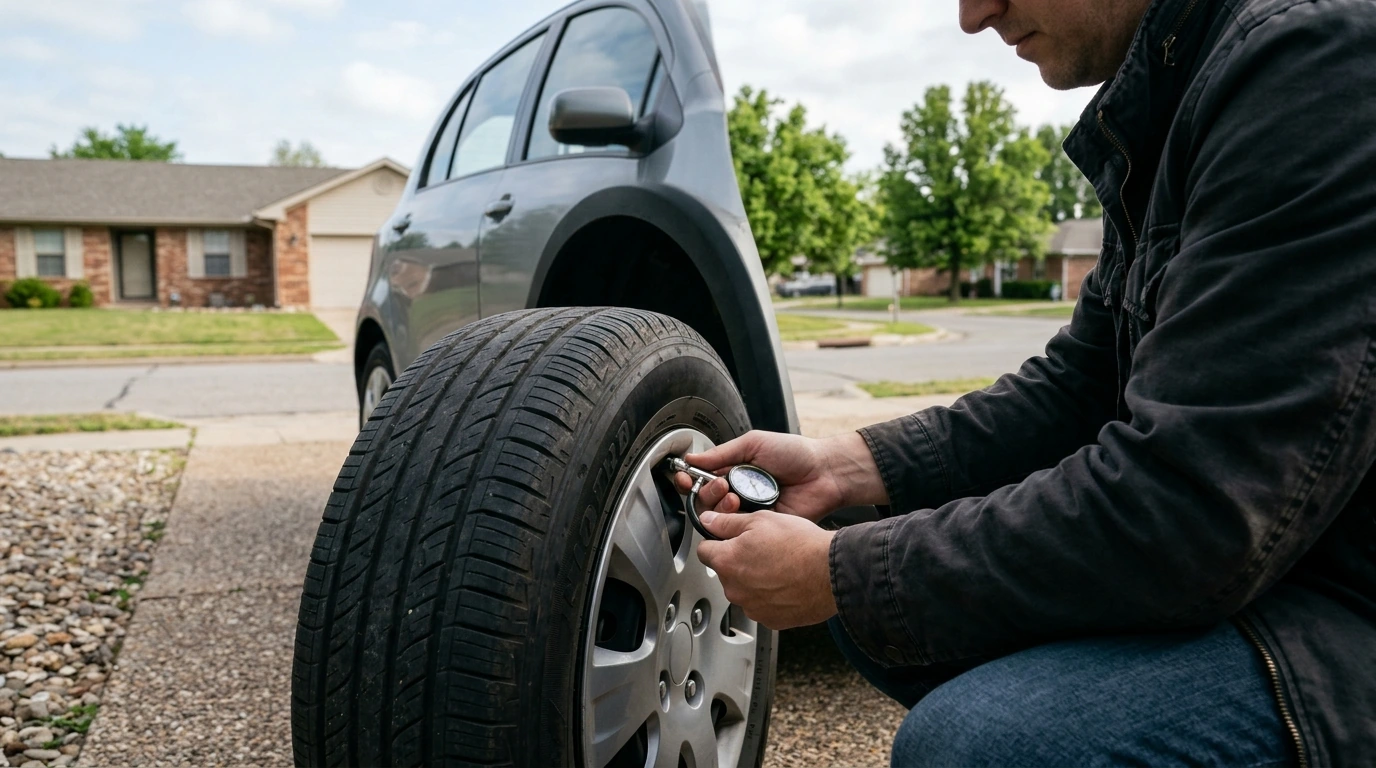
Check tire pressure regularly and inflate tires to the vehicle manufacturer’s recommended pressure. You can usually find it on the driver-side door placard or in the owner’s manual. Do not use the maximum pressure printed on the tire as your target. Check pressure when the tires are cold, following your vehicle’s instructions for an accurate reading.
Stay current with recommended maintenance, especially if a warning light comes on or the car is running poorly. Remove cargo you do not need, and take off a roof carrier when it is no longer in use to reduce drag. These are useful checks even if you never change your route: they help you avoid carrying weight or equipment that serves no purpose on an ordinary drive.
A map app is useful for comparing routes, traffic, and estimated arrival times. A fuel-tracking app—or a simple notebook—can help you notice changes in your own costs over time. Use either as a decision aid rather than expecting it to deliver a precise savings figure for every trip.
If you use an AI tool, give it a limited job: organize a list of errands by location or suggest departure times to compare. Verify its suggestions against live traffic, road conditions, and your vehicle’s needs before you drive. Do not follow a suggested turn or route that seems unsafe or conflicts with posted directions.
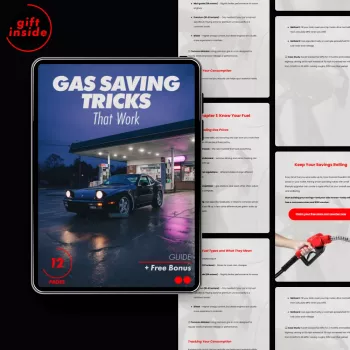
For a structured way to put these ideas together, our Gas Saving Tricks That Work digital guide focuses on practical driving habits, route planning, and fuel-saving ideas you can consider for your routine. It is a planning resource, not a guarantee of lower costs. If daytime glare affects your comfort behind the wheel, our Timberland Sunglasses are another option to consider for your driving kit; sunglasses do not reduce fuel use and should not replace attentive driving or a clear view of the road.
Pick two habits to try first, such as smoother acceleration and combining errands. Keep the rest of your routine as consistent as reasonably possible while you track results. That makes it easier to tell whether a change is helping, rather than attributing every difference at the pump to one new habit.
Skip claims of guaranteed savings. Your vehicle, terrain, weather, traffic, and driving conditions all affect fuel use. Revisit your plan when your commute, season, or vehicle changes. The most useful gas-saving trick is one you can keep doing safely on the drives you already make.
Not always. Avoid unnecessary high speeds and abrupt speed changes, but drive at a safe speed for the road and conditions. Fuel efficiency varies by vehicle.
No. It can help organize stops or compare routes, but estimates cannot account perfectly for traffic, driving style, terrain, and other changing conditions. Verify suggestions before driving.











Leave a comment