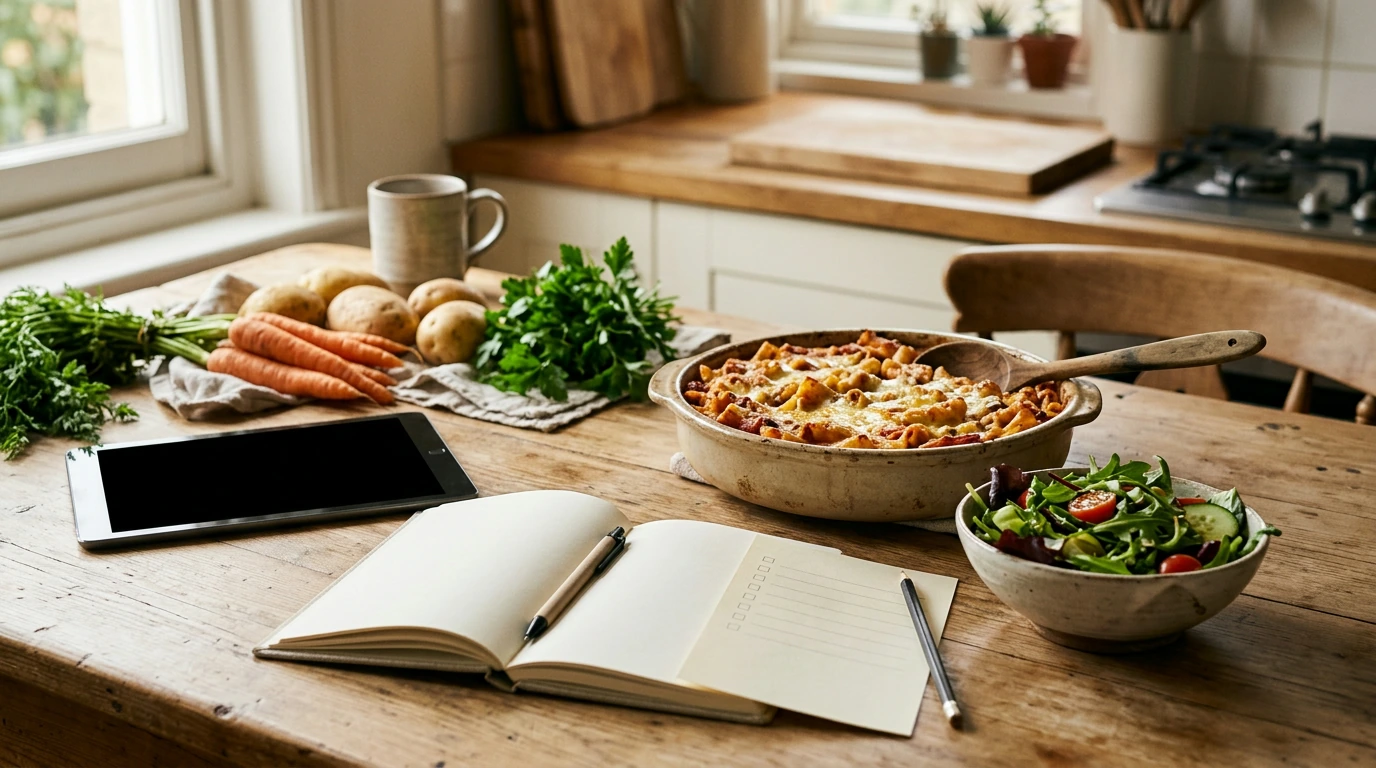
Comfort food hits differently when your week is packed. It’s warm, familiar, and grounding—right up until the planning turns into another decision-heavy task. Our team built the AI Comfort Food Toolkit for Weekly Plans – 4-in-1 Bundle of Guides, eBooks, and Checklists to keep the comfort and remove the scramble, so you can move from “What’s for dinner?” to an actually workable routine that fits your time, budget, and household preferences.
You don’t need a new personality, a perfect pantry, or a complicated meal plan to eat cozy food consistently. This toolkit focuses on the friction points that tend to derail weeknights and gives you a repeatable structure you can reuse.
| Step | What to decide | What it prevents | Time needed |
|---|---|---|---|
| 1. Pick the comfort theme | Choose the vibe for the week (soups, pastas, trays, bowls) | Random shopping and mismatched ingredients | 5 minutes |
| 2. Choose 4–6 core dinners | Select repeatable meals plus one “easy rescue” night | Overplanning or relying on willpower | 10–15 minutes |
| 3. Add lunches + leftovers | Decide which dinners become lunch and when | Food waste and last-minute lunch purchases | 5–10 minutes |
| 4. Build the shopping list | Group ingredients by category and prioritize multi-use items | Duplicate buys and missing key items | 10–15 minutes |
| 5. Prep and timing check | Assign prep tasks to lighter days; schedule quickest meals for busiest nights | Weeknight bottlenecks and burnout | 5 minutes |
We designed this as a toolkit, not a strict program. You can use the full set for a complete weekly system, or grab one checklist when time is tight.
If you want a single starting point, begin with the theme + core dinners, then let the checklist format do the heavy lifting from there. The win isn’t perfection—it’s fewer “last-minute” moments because your decisions are already made.
Comfort meals can absolutely feel satisfying without leaving you stuck in a heavy-food rut. A simple structure keeps things cozy and varied.
For general healthy-plate guidance, you can reference USDA MyPlate or the Harvard Healthy Eating Plate to keep your comfort favorites in a pattern that still feels good day to day.
Planning breaks down when the pantry doesn’t support your week. You don’t need a huge inventory—just a short list of reliable building blocks.
If your spice cabinet is part of the problem, our team also recommends setting up a consistent, tidy “seasoning station” with the Nordic Ceramic Seasoning Jar Set – Creative Kitchen Spice Storage Box so your most-used flavors stay organized and quick to reach.
For food storage basics that protect both quality and safety, the FDA’s food storage and safe handling guidance is a helpful reference for everyday routines.
It’s built for both: beginners get structure and prompts that remove decision fatigue, while experienced cooks get a repeatable planning system and checklists that reduce weekly friction.
Yes. The toolkit focuses on flexible planning frameworks, so you can swap ingredients within the same pattern (protein, sauce, starch, veggie) and keep a “safe meal” in rotation for picky eaters.
Once you’ve used the rhythm a few times, most weekly planning lands around 20–40 minutes depending on household size. On busy weeks, you can move faster by using only the checklists to choose dinners and build your list.












Leave a comment