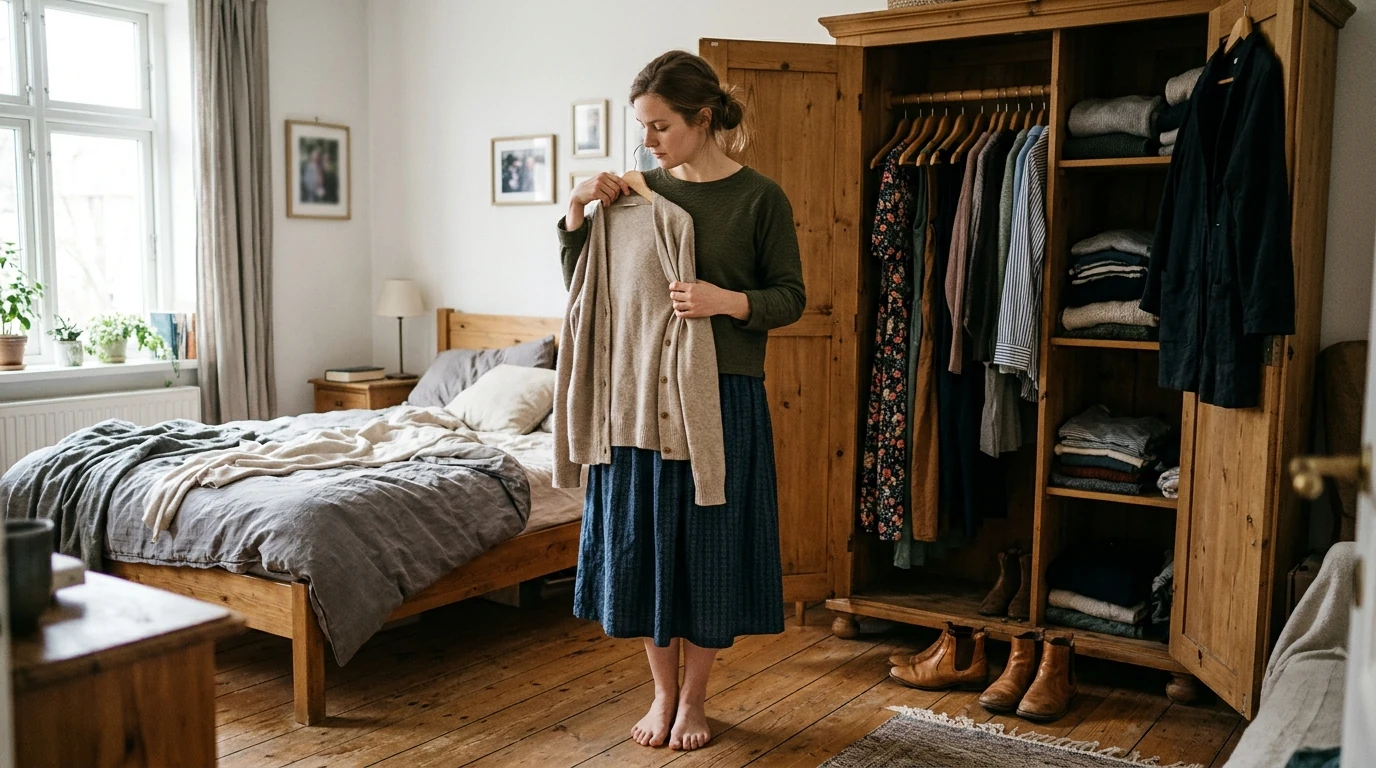
A modest wardrobe can be expressive, comfortable, and ready for everyday life without being large. You do not need to start with a list of “essential” pieces or follow someone else’s definition of the right silhouette. Start with the clothes you already enjoy. From there, you can use layers, proportions, and small styling changes to make more outfits that feel like you.
Begin with a quick wardrobe check. Set aside the pieces that give you the coverage you prefer and still feel comfortable after a full day. As you handle them, notice what they have in common: a neckline you like, sleeves that stay in place, a fabric that feels good against your skin, or a fit that lets you move easily.
Next, put together two or three combinations you already wear happily. These outfits are better clues than an idealized capsule wardrobe. You might discover that you favor soft colors and flowing shapes, or that you feel most at home in crisp layers and straight lines. Either approach can be a starting point.
Write down only the gaps that keep those outfits from working more often. Perhaps you could use a light layer for changing temperatures or a bottom that pairs with several favorite tops. Try new combinations first; a genuine gap will become clearer as you wear what you own.
A useful layer helps an existing piece suit more of your day. A longer top can change how you feel wearing trousers, while a cardigan or jacket can add coverage to a dress you love. A lightweight underlayer may make a favorite neckline or sleeve length more comfortable for you without changing the character of the outfit.
Try the complete outfit while sitting, walking, and reaching, not just while standing in front of a mirror. Layers that pull, bunch, or need constant adjustment are unlikely to become favorites. Notice fabric opacity in the light where you will wear it, and consider whether you can add or remove a layer as the weather changes.
Balance is personal, not a fixed formula. A relaxed top can work with straight-leg trousers for a clean shape or with a flowing skirt for a softer one. Choose the combination that gives you the coverage and ease you want while still looking like your style.
Think of the following as outfit-building roles rather than a shopping checklist. You can fill every role with something you already own, skip a role that does not suit you, or adjust the examples to match your preferred coverage.
| Wardrobe role | Possible piece | Ways to adapt it |
|---|---|---|
| Everyday base | Comfortable long-sleeve top | Wear alone or under a dress or outer layer |
| Versatile bottom | Straight-leg trousers or a flowing skirt | Pair with relaxed tops and more structured layers |
| One-piece option | Dress in a comfortable length | Adjust warmth and styling with a layer |
| Finishing layer | Cardigan or jacket | Add coverage, warmth, or a more polished shape |
Once you have a reliable foundation, change one detail to suit the occasion. A dress and comfortable layer might feel casual with everyday shoes; switching to dressier shoes or a more structured jacket can make the same foundation feel polished. Accessories can offer another small change. If sunglasses fit your plans and personal style, our Timberland Sunglasses are one option to consider alongside accessories you already have. The aim is not to make every outfit look different. It is to give you a few dependable combinations that can follow you through different parts of your week.
When a real gap does appear, consider more than how a piece looks on its own. Will its fabric weight work in your climate, perhaps with a layer in cooler weather? Are its care requirements realistic for your routine? Most importantly, does it work with clothes you already reach for?
One decision aid is to picture three outfits you would actually wear with the new piece. Three is not a rule, and a special-occasion item may have a different purpose. It is simply a way to pause before adding something that has no clear place in your closet.
Keeping useful clothes in rotation and buying with care can also help reduce clothing waste. The U.S. Environmental Protection Agency’s textiles data documents the scale of textile waste in the United States; it is a reminder to make the most of pieces that already serve you well.
If you would like support as you shape your wardrobe, our Graceful Style Without Compromise modest fashion guide is a digital option to consider. Use a guide as a companion to your own experience, not as a replacement for it. You know which outfits feel comfortable on a long day and which pieces you are glad to wear again.
Keep a few notes in a place you will revisit: the coverage you prefer, outfit combinations that reliably work, and colors or silhouettes you enjoy. Add possible purchases only when you have noticed a real gap. You can also note why a combination did not work—perhaps a layer was too warm or a fabric needed more care than you expected.
A flexible wardrobe grows from knowing what feels right for you. Our team hopes you find more ways to wear those pieces, with room for your preferences to change over time.
No. Start with pieces that already meet your comfort and coverage preferences, then try different combinations and layers before buying anything.
Keep a comfortable base outfit and change one element at a time, such as a layer, silhouette, color pairing, or accessory. Small changes can give a familiar combination a different feel.









Leave a comment