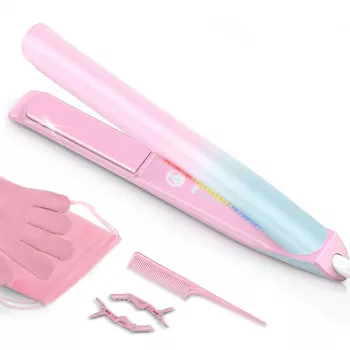
A streamlined styling routine starts with a tool that can handle more than one look. Our Professional Ceramic Hair Straightener & Curler is made for straightening and curling, with dual-voltage capability and a listed maximum temperature of 470°F. Whether you usually wear your hair sleek or like to add a bend at the ends, a few thoughtful choices can help you make the most of one tool. For more guidance, see 8 Best Curling Irons, Tested by Our Experts.
A straightener-and-curler format gives you room to change your look without keeping two separate heated tools on hand. For straighter lengths, work with a manageable section and guide the tool through it at a steady pace. For turned ends, gently rotate near the bottom of the section. To try a curl, rotate the tool as the hair moves through it. For further reading, see Ceramic Dual Voltage Flat Iron | flat-iron.org.
Small changes in section size, angle, and movement can change the result. You do not need to aim for a perfect shape on the first pass; start with a controlled motion and see how your hair responds. Avoid clamping one spot for an extended time or repeatedly going over the same section to correct it.
| Look | Approach | Helpful habit |
|---|---|---|
| Straight lengths | Work through manageable sections with a steady pass. | Keep hair fully dry before using heat. |
| Turned ends | Gently rotate the tool near the ends. | Start with a small turn and adjust as needed. |
| Soft curls | Rotate as the section moves through the tool. | Let the curl cool before handling it. |
Give each styled section a moment to cool before brushing it out or adjusting it with your fingers. That pause also lets you assess the shape before deciding whether anything needs changing. Your hair’s texture, length, and condition all affect the finished look, so treat the table as a starting plan rather than a promise of identical results every time.
The product’s listed 470°F maximum is a ceiling, not a setting you need to use every day. If adjustable temperatures are available, begin with a lower suitable setting and increase only if needed, following the tool’s instructions. Work in sections you can handle comfortably so you can move through each one without lingering or making repeated passes.
Heat deserves extra care if your hair is fragile, damaged, or chemically treated. Start with fully dry, detangled hair, and use an appropriate heat protectant according to its label. The American Academy of Dermatology Association’s hair-care guidance is another useful resource when you are considering how heat styling fits into your broader routine. If your hair is already breaking or feels unusually vulnerable, giving it a break from hot tools may be the more sensible choice.
Temperature is only one part of the decision. How long heat stays on a section, how often you style, and how gently you handle your hair afterward matter too. You can simplify the process by deciding on your look before turning the tool on, then styling each section with a clear motion instead of experimenting repeatedly on the same strands.
Dual voltage can make a styling tool more practical to pack, but it does not answer every travel question. Before departure, confirm the voltage range and operating instructions on the actual tool. Voltage compatibility is also different from plug shape: you may still need an outlet adapter for your destination. An adapter changes how a plug fits an outlet; it is not a substitute for confirming that the tool can operate with the available voltage.
Leave time for the tool to cool completely before putting it in your bag, and check any airline or accommodation rules that apply to your plans. A little preparation at home is easier than sorting out outlets and packing a warm tool while you are trying to leave. If you are putting together a small travel kit, our Timberland Sunglasses are another packable option to consider alongside your everyday essentials.
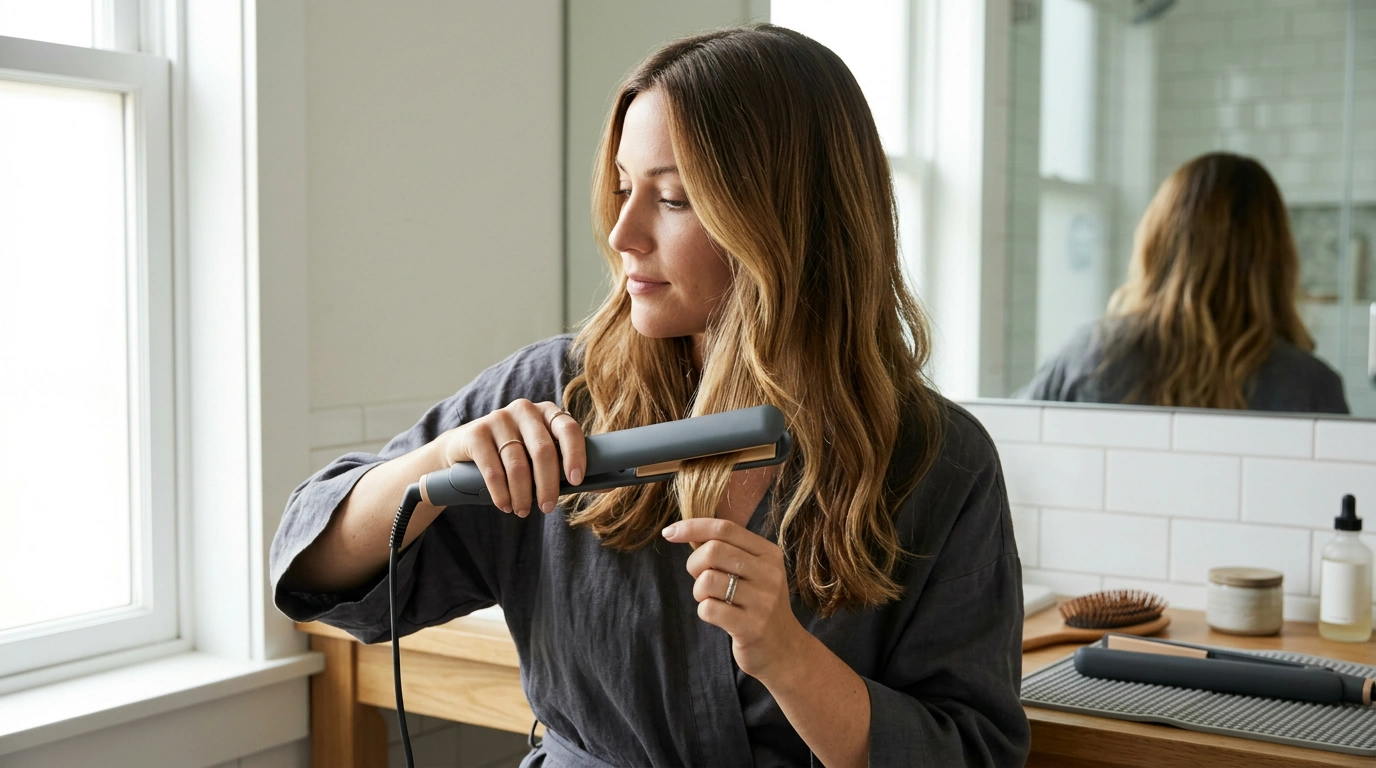
Start by drying and detangling your hair, then divide it into sections you can style without rushing. Choose a suitable temperature where the tool offers that option. Work through one section at a time: use a steady pass for straighter hair, a small turn for shaped ends, or a controlled rotation when trying curls. Let finished sections cool before you handle or arrange them.
Keep the heated surfaces away from your skin throughout the process, and set the tool on a heat-safe surface whenever you put it down. Unplug it after use and let it cool fully before storing it. These habits are easy to overlook on a busy morning, but making them part of the routine keeps your attention on both your style and safe handling.
If switching between straight looks and curls with one tool suits your routine, explore our Professional Ceramic Hair Straightener & Curler and decide whether its features match the way you like to style.
No. It is the listed maximum, not a default setting. If the tool offers adjustable heat, follow its instructions and use the lowest suitable setting for your hair and desired result.
Not necessarily. Confirm the voltage range and instructions on the tool, and bring a plug adapter if your destination uses a different outlet shape.
Yes. This product is sold as a straightener and curler. A steady pass and a controlled rotating motion offer different styling approaches, though results depend on your technique and hair.








Leave a comment