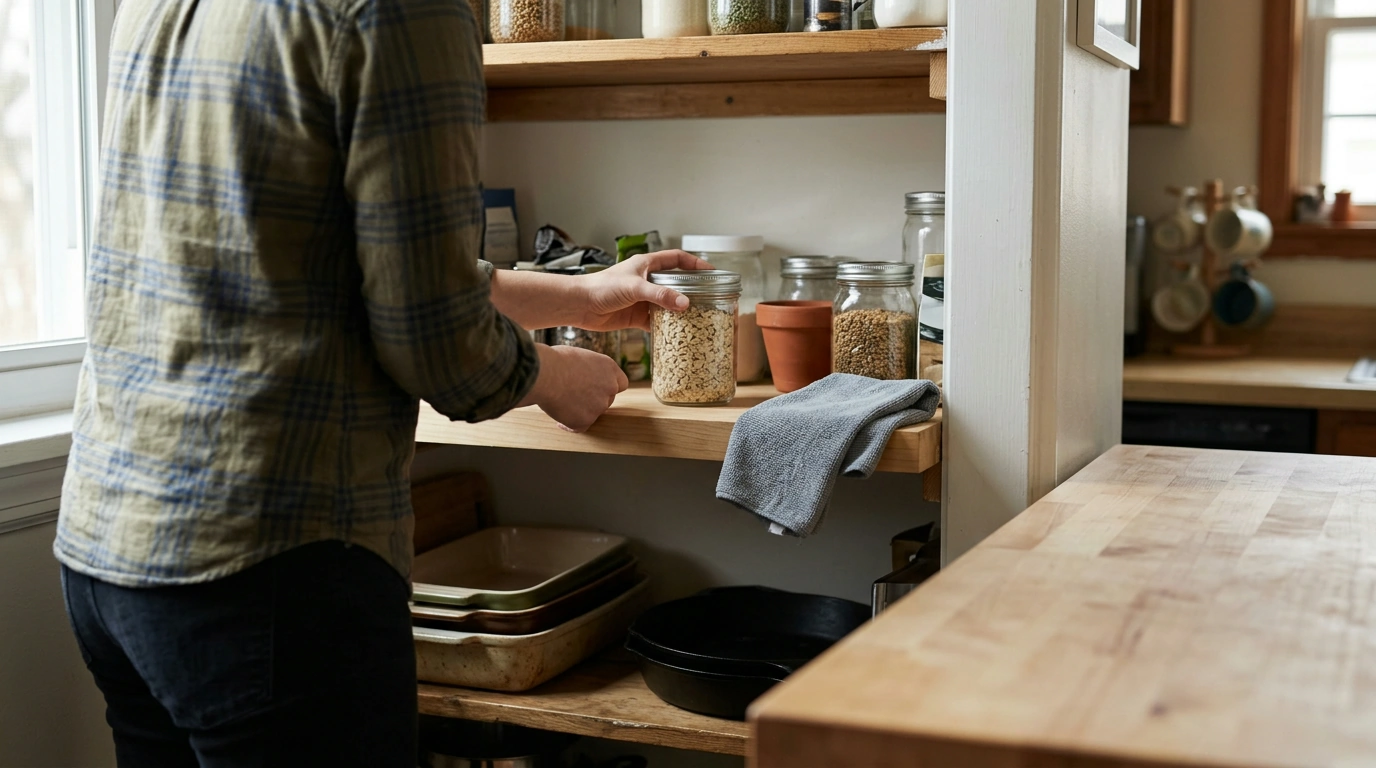
A kitchen reset does not have to mean emptying every cabinet in one afternoon. A calmer space often starts with a few practical decisions: clear what no longer belongs, give everyday items an easy-to-reach home, and set up a pantry you can maintain. We recommend working in small zones so you can finish each session and still use your kitchen at dinnertime.
Choose one shelf, drawer, or stretch of counter. Give yourself a short block of time, and finish that spot before starting another. A completed drawer is more useful than a kitchen full of half-sorted piles.
Take everything out, wipe the surface, and sort what you find into four groups: keep, relocate, donate, and discard. As you handle food, note dates and storage instructions. Dates can mean different things, so do not rely on appearance alone when deciding whether food is safe. The FoodKeeper App from FoodSafety.gov offers storage guidance for common foods.
Return only what serves that zone. If you make coffee there each morning, mugs and coffee supplies may belong nearby. If a tool has not been useful in that spot, give it another home. Our goal is a kitchen that supports your routines, not one that looks tidy for a day and then becomes difficult to use.
Before buying bins or jars, look at what you already have. Group foods in a way that makes sense for your meals—perhaps breakfast, baking, weeknight dinners, and snacks. Place frequently used ingredients where you can see and reach them, with heavier items on lower shelves. Move older products toward the front so they are easier to notice and use first.
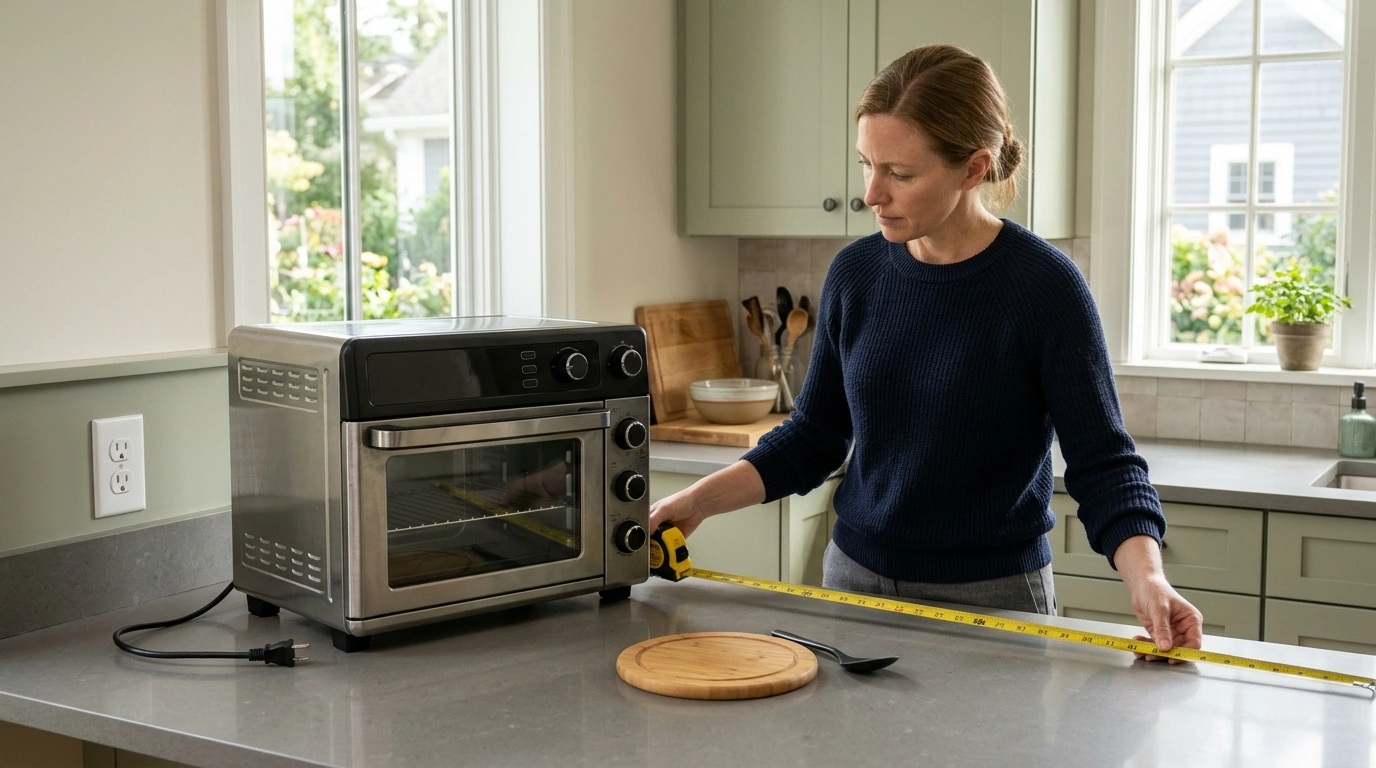
Labels help most when a container’s contents are not obvious, especially after you transfer an ingredient out of its original package. Keep its dates, storage directions, and other important package information accessible, whether you save the packaging or record the details. If you are considering new organizers, measure your shelves first and identify the specific problem each one would solve.
For a more guided project, our Simple Steps to Reset, Refresh, and Reimagine Your Kitchen guide can help you approach the reset step by step. You can also use this quick checklist to keep a single pantry session manageable.
| Step | What to do | Payoff |
|---|---|---|
| Clear | Work shelf by shelf and remove spills or crumbs. | A clean starting point without overwhelming the kitchen. |
| Sort | Group similar foods and check what you already have. | Fewer duplicates and easier meal planning. |
| Place | Keep everyday items visible and put older items toward the front. | Less searching and less forgotten food. |
| Maintain | Do a quick check before grocery shopping. | A system that stays useful between deeper resets. |
A pantry you can see into is easier to shop from. Before your next grocery trip, look for ingredients that could anchor a meal or need to be used soon. The EPA’s guidance on preventing wasted food at home offers more ideas for planning around food you already have.
Next, watch how you move through prep, cooking, and cleanup. Store tools near the tasks they serve: a frequently used spatula should not require a walk across the kitchen, while a serving piece used a few times a year does not need prime counter space. Leave enough open surface to prepare food comfortably.
Keep regularly used tools within easy reach and move less-used appliances or serving pieces to suitable cabinet storage. If seasonings crowd the cooking area, our Nordic Ceramic Seasoning Jar Set offers a dedicated place for commonly used spices. Decide where it would be useful before adding it to the counter, and store ingredients according to their packaging directions. A defined spot should make cooking easier, not trade away the prep space you need.
Try a five-minute closing routine after dinner: return stray items, clear your main prep surface, and note any ingredients you want to use soon. This small habit makes the next cooking session easier to start without requiring another full cleanout.
Before shopping, check the pantry and plan a few meals around what is already available. When you put groceries away, place new items behind comparable older ones when appropriate. After a couple of weeks, revisit the zones you reset. If the same item repeatedly lands somewhere other than its assigned spot, its home may be inconvenient. Move it to where you naturally reach for it instead of treating your first arrangement as a rule.
You do not need to complete the kitchen all at once. Finish one useful zone, notice what works, and carry that lesson into the next one. We find that the easiest system to maintain is the one that fits how you cook on an ordinary day.
There is no required timeline. Start with one shelf or drawer in a short session, then continue zone by zone as your schedule allows.
No. Grouping food, keeping it visible, and making it easy to reach matter more than matching containers. Measure your shelves and buy a container only when it solves a specific storage problem.
Take a quick look before grocery shopping. Do a more thorough review when shelves become crowded or you have trouble finding what you need.










Leave a comment